
 Image 1 of 2
 Image 2 of 2
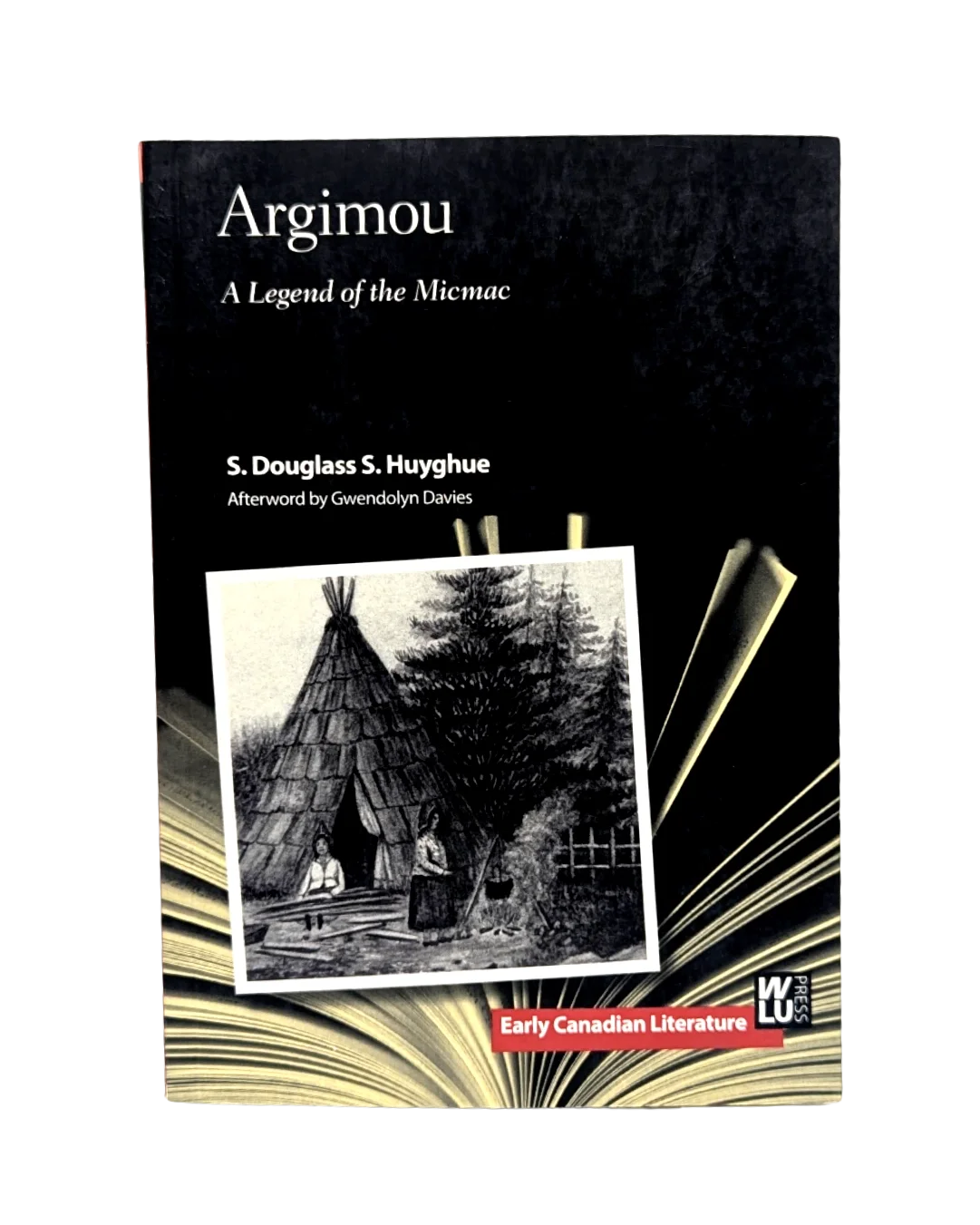
A historical romance set against the backdrop of Indigenous-French-English conflict in 1755 New Brunswick, Argimou: A Legend of the Micmac, by New Brunswick novelist Douglas Huyghue, first apeared in the Saint John Amaranth in 1842.
On one level an adventure-laced captivity tale and topographical novel, Argimou integrates the fall of Fort Beausejour and the suffering of dispossessed Acadians into its tale of the shift of colonial power from France to England. A dramatic finale on the reversing falls in Saint John underscores the heroic proportions of the novel’s legendary Mi’kmaw protagonist, Argimou.
Whether read as an escapist romance or a novel of social concern, Argimou captures a sense of the Tantramar marshes, boundless forests, and majestic waterways of pre-Victorian New Brunswick. And its direct appeal to contemporary readers to pay attention to the disenfranchised state of Indigenous peoples makes the novel an original contribution to early Canadian fiction.
Situating the novel in its historical and geographical context, the afterword to this new edition foregrouds the author’s adaptation of historical-fiction conventions popularized by Sir Walter Scott as well as Huyghue’s social concern over the marginalization of Indigenous culture.
A historical romance set against the backdrop of Indigenous-French-English conflict in 1755 New Brunswick, Argimou: A Legend of the Micmac, by New Brunswick novelist Douglas Huyghue, first apeared in the Saint John Amaranth in 1842.
On one level an adventure-laced captivity tale and topographical novel, Argimou integrates the fall of Fort Beausejour and the suffering of dispossessed Acadians into its tale of the shift of colonial power from France to England. A dramatic finale on the reversing falls in Saint John underscores the heroic proportions of the novel’s legendary Mi’kmaw protagonist, Argimou.
Whether read as an escapist romance or a novel of social concern, Argimou captures a sense of the Tantramar marshes, boundless forests, and majestic waterways of pre-Victorian New Brunswick. And its direct appeal to contemporary readers to pay attention to the disenfranchised state of Indigenous peoples makes the novel an original contribution to early Canadian fiction.
Situating the novel in its historical and geographical context, the afterword to this new edition foregrouds the author’s adaptation of historical-fiction conventions popularized by Sir Walter Scott as well as Huyghue’s social concern over the marginalization of Indigenous culture.